


 Accidents, injuries, or improper oral health care can result in the loss of a tooth. Depending on the location of this tooth, replacement may be desired or recommended.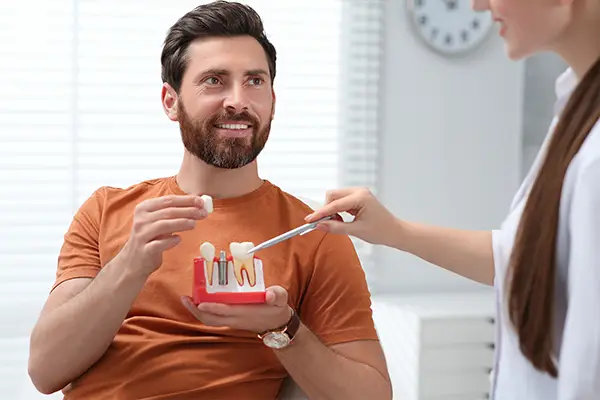
Is a single dental implant worth it?
For most patients, a single dental implant is the gold standard for replacing a missing tooth.
Unlike a traditional bridge, which requires filing down the two healthy teeth on either side of the gap, an implant stands on its own without compromising your surrounding teeth.
It also preserves your jawbone by mimicking the function of a natural tooth root, which prevents the bone loss that begins as soon as a tooth is lost.
Patients at Riverwind Dental consistently tell us that their implant looks, feels, and functions just like a real tooth. You can eat, smile, and speak with complete confidence.
When you weigh the long-term benefits against alternatives that may need to be replaced or repaired over time, a single dental implant is one of the most reliable investments you can make in your oral health.
How long do single dental implants last?
With proper care, a dental implant itself can last a lifetime. The titanium post that's placed into your jawbone fuses with the surrounding bone through a process called osseointegration, creating an incredibly strong and durable foundation.
The crown attached to the implant typically lasts 10 to 15 years or longer before it may need replacement due to normal wear.
Factors that influence longevity include your oral hygiene habits, regular dental checkups, and lifestyle choices like smoking. At Riverwind Dental, we use high-quality implant systems and precision-guided placement techniques to give every implant the best possible start.
We'll also set you up with a maintenance plan so your implant stays healthy for decades to come.
What disqualifies you from dental implants?
Very few conditions are absolute disqualifications for dental implants, but certain factors may require additional treatment before placement. Insufficient jawbone density is one of the most common concerns, though bone grafting can often resolve this and make implant placement possible.
Uncontrolled diabetes, active gum disease, heavy smoking, and certain autoimmune conditions can affect healing and implant success, so these need to be managed before moving forward.
Patients who are currently undergoing radiation therapy to the head or neck area may also need to wait before pursuing implants. The good news is that many patients who were previously told they weren't candidates discover that advances in implant technology have opened the door for them.
During your consultation at Riverwind Dental, we'll evaluate your bone health, medical history, and overall oral condition to determine whether you're a good candidate or if any preliminary steps are needed first.
What is the 3/2 rule for dental implants?
The 3/2 rule is a clinical guideline dentists use when planning implant placement to ensure long-term success. It states that a dental implant should be positioned at least 3 millimeters away from any adjacent natural tooth and at least 2 millimeters away from another implant.
This spacing allows adequate blood supply to the bone between the implant and neighboring teeth or implants, which is critical for maintaining healthy tissue and preventing bone loss over time.
Proper spacing also gives the gum tissue enough room to form natural-looking contours around the restoration. At Riverwind Dental, we use advanced 3D imaging and digital treatment planning to measure these distances precisely, ensuring your implant is placed in the ideal position for both function and aesthetics.
This attention to detail is one of the reasons our Henrico patients achieve such predictable, long-lasting results.